
How to Negotiate with Chinese Gym Equipment Manufacturers: Tips from Industry Insiders
Know What You're Buying Before You Sit Down
Chinese manufacturers range from massive factories with ISO certification to small workshops assembling parts. Your negotiation strategy changes depending on who you're dealing with. Don't walk in blind.
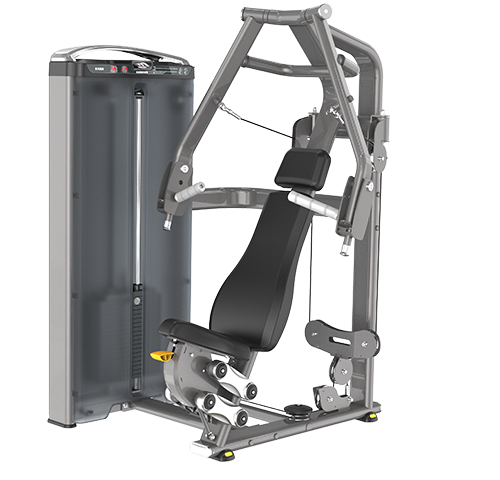
Start with a clear spec sheet. Know which models you need, what steel gauge, what upholstery density, what cable thickness. For a commercial gym, a machine like the MEL-001 Chest Press
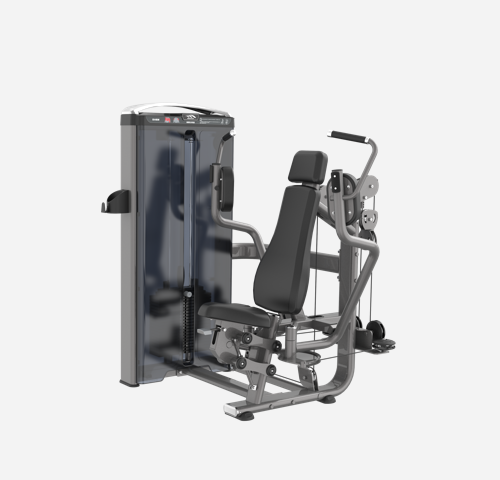
Pull catalogues from three to five suppliers. Compare features on similar items: the MEL-002 Pec Fly
Factory Audits Are Non-Negotiable
Never finalize an order without seeing the production line. A video call works as a first filter, but a physical visit tells you more. Look at the welding robot consistency. Check if they stock spare parts. Ask about their R&D team—MBH runs a 380,000-square-meter base with independent R&D. That scale tells you they're not a fly-by-night operation.
If you can't visit, hire a third-party inspection company. They'll check everything from cable tension to powder coat adhesion. Factor that cost into your negotiation—it's leverage.
Building Your Negotiation Leverage
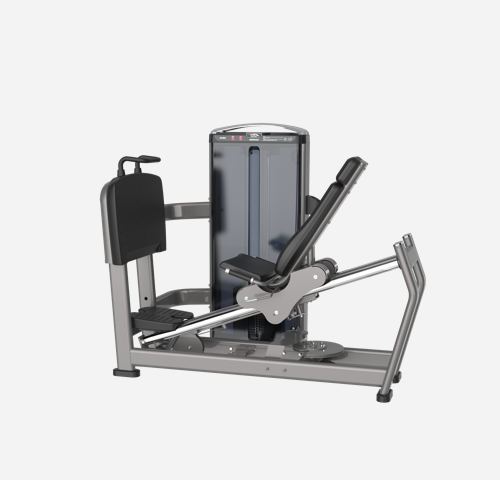
Volume matters. A single unit of the MEL-015 Leg Press
Chinese suppliers quote based on MOQ (minimum order quantity). For the XHA-023A Weight Bench (Premium), the MOQ might be 50 pieces. Ask for a mixed container—combine benches, racks, and machines. Most suppliers will negotiate if you're filling a 20-foot or 40-foot container.
Payment terms are your other lever. Standard is 30% deposit, 70% before shipment. Offer 30% deposit, 40% on production completion, 30% after inspection. That protects you and shows you're serious.
What to Negotiate Beyond Price
- Custom logos and colors – Branding your gym or repainting the MEL-001A Chest Press to match your facility colors usually costs little but adds perceived value.
- Spare parts package – Get an extra set of cables, pulleys, and upholstery thrown in. For a machine like the MEL-012 Lat Pull Down, cable replacements are inevitable.
- Warranty terms – Push for 3 years on frames, 2 on moving parts. MBH offers complete after-sales service—use that as a benchmark.
- Freight and insurance – Ask for CIF (cost, insurance, freight) pricing so you know the landed cost upfront.
Quality Red Flags and How to Catch Them
Every factory says "high quality." You need objective checks. Ask for material certificates—grade 50 steel for frames, 303 stainless steel for hardware. The MEL-003 Shoulder Press uses commercial-grade steel. Confirm yours does too.
Request a pre-production sample. For a plate-loaded machine like the XHA-031 Deadlift Machine, test the weight horn spacing, bushing quality, and stability under load. Reject samples that wobble.
Watch for thin upholstery. Commercial gyms need high-density foam. Machines like the MEL-010 Abdominal Crunch should have 50mm+ foam on contact points. Push your thumb into the sample—if it compresses easily, walk away.
Comparing Models: Selectorized vs. Plate-Loaded
Your negotiation strategy changes based on machine type. Selectorized units like the MEL-014 Leg Extension have more components—weight stacks, selector pins, guide rods. These are more expensive to produce, but you get quicker member turnover.
Plate-loaded machines like the XHA-022 Incline Squat Machine are simpler and cheaper. They also allow more weight variation. Negotiate harder on plate-loaded units—margins are thinner, but volume is higher.
For a balanced gym, mix both. The MEL-006 Biceps Curl (selectorized) and the XHA-040 Preacher Curl Bench (plate-loaded) cover different needs. Bundle them in one PO for better pricing.
Aftersales Support and Service Contracts
What happens when a cable snaps on your XHA005 Cable Crossover six months in? Chinese manufacturers vary wildly on service. MBH provides complete aftersales—parts replacement, technical support, even video troubleshooting. Ask potential suppliers for their service protocol.
Get in writing the response time for spare parts. A good supplier ships replacement cables within 72 hours. A bad one makes you wait weeks. That downtime costs you members.
Request a service manual with each machine. For the MEL-017 Calf Extension, you need adjustment instructions, cable routing diagrams, and tension specs. If they can't provide PDFs, it's a red flag.
Final Tips From Industry Insiders
- Always ask for the "ex-factory" price first. Then negotiate freight separately. You'll see where the margin is.
- Use Chinese public holidays (Chinese New Year, Golden Week) to your advantage. Factories want orders booked before shutdowns.
- Don't accept "quality control certificate" at face value. Ask for testing reports from SGS or TÜV. For a machine like the MEL-008 Assisted Chin/Dip, static load testing is critical.
- Establish a relationship with one sales rep. Consistency matters in Chinese business culture.
Your best bet is a manufacturer with a track record of supplying clubs and gyms directly. MBH operates at ex-factory pricing with high cost-effectiveness and proven after-sales service. Their range from the MEL-015 Leg Press to the ZH-030 Barbell Rack covers full commercial needs. With a 380,000-square-meter base and independent R&D, they're built for serious partnerships.
Negotiate hard, but negotiate fair. The best deals come when both sides know the other is committed to quality.