


How Chinese Fitness Equipment Brands Are Competing On Quality In 2026
Five years ago, "Made in China" meant budget-friendly but questionable durability for gym equipment buyers. That reputation is dead. By 2026, leading Chinese manufacturers have flipped the script entirely. They're not just matching Western quality standards — they're setting new ones.
The shift became visible around 2023. Factories in Shandong and Jiangsu provinces began investing heavily in R&D, precision manufacturing, and quality control systems. The results? Equipment that consistently passes 500,000+ cycle tests, tighter weld tolerances, and upholstery that lasts years longer than previous generations.
What's Driving the Quality Leap
Manufacturing Infrastructure Upgrades
Take MBH as a case study. Their modern technology innovation industry base spans over 380,000 square meters. That's not just a factory floor — it's a dedicated ecosystem for design, testing, and production under one roof. Vertical integration allows for tighter quality control at every stage.
Brands like MBH now control their entire supply chain. From raw steel selection to final assembly, every step is monitored. This eliminates the variability that plagued earlier Chinese-made equipment.
Material Standards Have Risen
The steel is thicker. The welding is cleaner. The bearings are rated for higher loads. Compare a 2026 model like the MEL-003 Shoulder Press
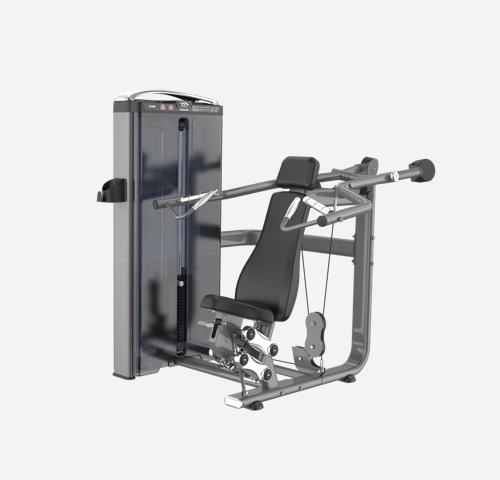
Chinese manufacturers now source 3mm to 4mm steel tubing as standard for commercial-grade machines. Foam density has increased from 80kg/m³ to 120kg/m³ in most premium lines. These aren't marketing claims — they're measurable specs that gym operators can verify.
ISO and EN Certification Is Now Standard
In 2026, serious Chinese brands carry ISO 9001, ISO 14001, and often EN 957 or ASTM certifications. Buyers can request test reports on demand. The days of "trust us, it's heavy duty" are over. Data backs the claims.
- Frame warranties now commonly run 5-10 years
- Pulley systems use sealed bearings rated for 300+ lbs
- Cable integrity testing exceeds 200,000 cycles
- Upholstery meets California TB117 fire safety standards
Real Product Examples That Prove the Point
Look at the selectorized strength line from MBH. The MEL-001 Chest Press
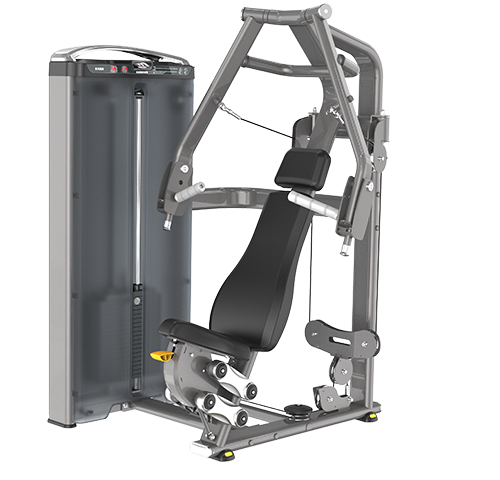
For plate-loaded applications, the MEL-015 Leg Press
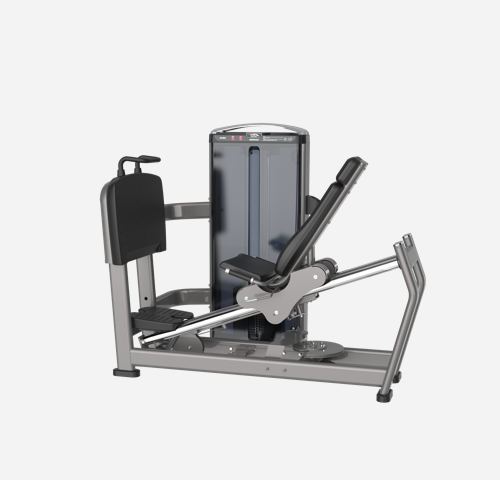
The MEL-006 Biceps Curl uses a rotating handle that accommodates supination during the movement. Small detail. Big difference in user experience. These are the refinements that keep members returning to your gym.
Cost-Effectiveness Without Cutting Corners
Here's the reality gym buyers face: Western brands offer proven quality at premium prices. Budget brands offer low prices with questionable longevity. Chinese brands in 2026 sit in the sweet spot — meeting commercial duty requirements at 30-40% lower acquisition cost.
MBH's ex-factory pricing model removes distributor markups. You're paying for the equipment and the factory's overhead, not a middleman's warehouse network. For a 20-station strength room, that difference often covers an entire year's warranty reserve or new flooring.
The XHA005 Cable Crossover demonstrates this clearly. Dual weight stacks, 200lb per side, aircraft-grade aluminum pulleys, and a footprint under 10 x 8 feet. The build quality competes directly with units costing 60% more from legacy brands.
What Gym Operators Should Look For
When evaluating Chinese-made equipment for your facility, focus on these specific indicators:
- Weld quality: Consistent beads with no porosity or undercut
- Guide rod alignment: Smooth, silent travel through full range
- Cable path: No rubbing against frame edges or other cables
- Weight stack labeling: Permanent engraving, not stickers
- Upholstery attachment: Stapled and glued, not just stretched
- Seat adjustment: Positive locking with no slop
If you're visiting a showroom or factory, bring a set of calipers and a welding gauge. Serious manufacturers expect serious buyers. They'll let you measure.
After-Sales Support Has Evolved
The old complaint about Chinese equipment was simple: good product, no support. That's changed. Leading brands now maintain spare parts warehouses in North America, Europe, and the Middle East. Response times for warranty claims match industry averages.
MBH provides complete aftersales service including technical documentation, video assembly guides, and direct access to factory engineers. For a gym operator, that means less downtime when something needs attention. Every day a station is down is lost revenue.
Future Outlook: What's Next
By 2027, expect several Chinese manufacturers to achieve parity with top-tier Western brands across all measurable metrics. The gap that remains is brand perception — and that's shrinking fast as more gyms install Chinese equipment and report positive experiences.
Look for innovations in smart equipment integration. Many Chinese factories are already embedding IoT sensors and connectivity into their designs. The M-8809EL Elliptical shows how far control panel and electronics quality has come. These aren't afterthoughts anymore — they're designed alongside the mechanical systems.
The next wave will likely include more modular frame designs and standardized components across product lines. This simplifies maintenance and reduces spare parts inventory requirements for gym operators. Practical innovation driven by real operator feedback.
The Bottom Line for Buyers
Chinese fitness equipment in 2026 is a legitimate option for commercial gyms at every level. Budget facilities, mid-market chains, and even premium studios can spec Chinese-made equipment without compromising quality. The key is knowing which factories do it right.
Visit the production facilities. Inspect the products in person. Talk to current customers. The information is available — you just have to ask. Brands that produce strong, reliable equipment will welcome the scrutiny. Those hiding behind "competitive pricing" won't.
For a starting point, examine the MEL-012 Lat Pull Down or the MEL-014 Leg Extension. Both represent the quality ceiling that Chinese manufacturing has reached. Test them alongside comparable units from any global brand. The differences are smaller than most buyers expect. The price difference is very real.
The stigma around Chinese fitness equipment is disappearing. The products speak for themselves now. Smart gym operators are listening.