


The Future of Smart Fitness: How AI Workout Prescription, Fitness Apps, and Gym Equipment Work Together
For gym operators and distributors, that system changes the nature of the service being sold. The facility still provides machines and training space, but it can also provide structured guidance before a workout, connected feedback during the session, and a clearer view of progress afterward.
The practical model is straightforward. AI determines what the member should train. The app keeps the plan and training record accessible. Compatible gym equipment turns the recommendation into physical exercise. When those layers share information, the member experiences one connected training journey.
The Case for a Connected System
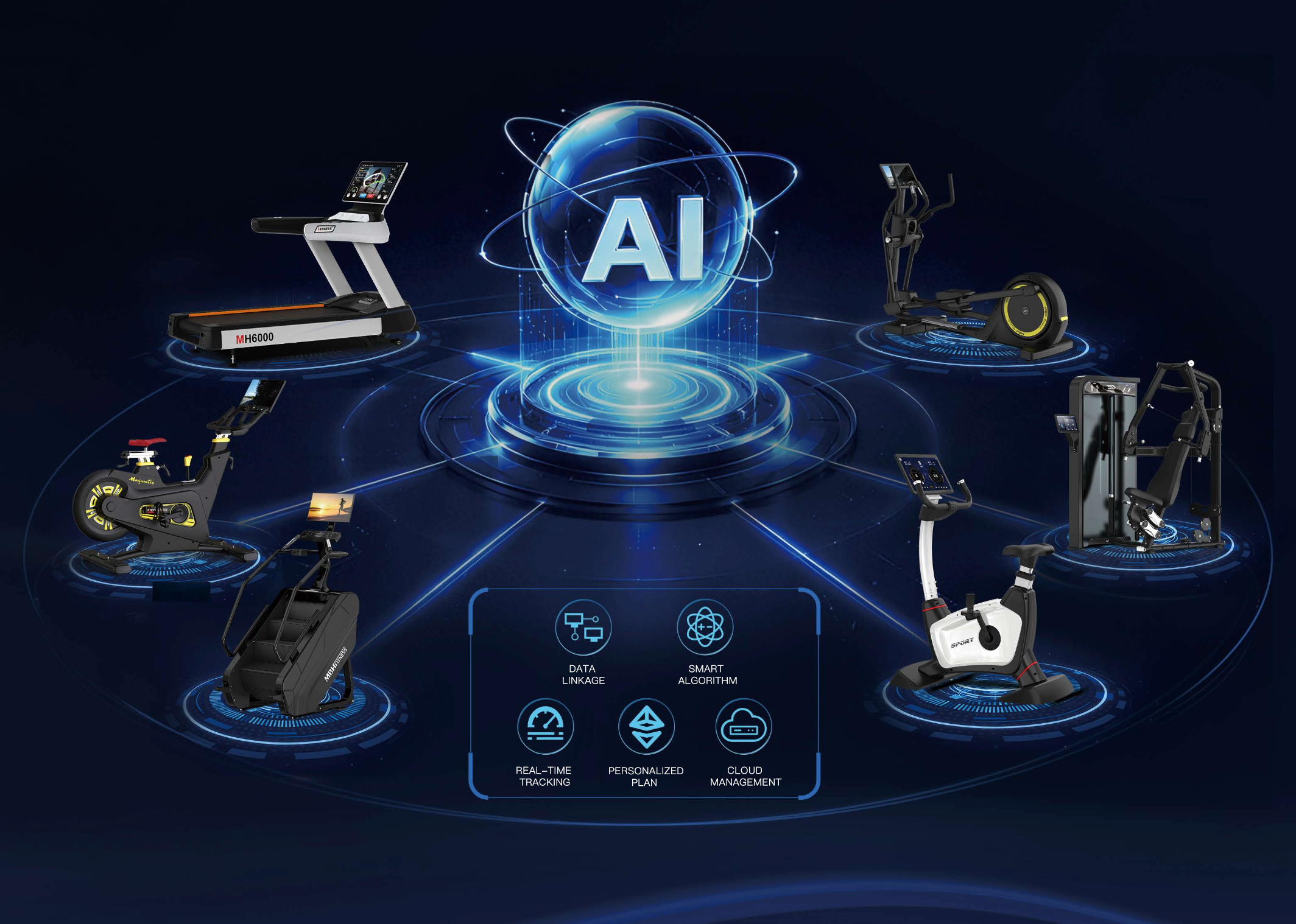
A smart fitness ecosystem has three working layers. The AI workout prescription interprets the member's profile and goals. The AI fitness coach app carries the plan into daily use. Smart equipment supplies the physical training environment and the data that can inform later adjustments.
These layers need different capabilities, yet they should support one member-facing experience. A recommendation that ignores the available machines is difficult to follow. A workout record that remains isolated inside a machine is difficult to use. A plan that never changes misses what the member's recent performance has shown.
| Layer | Primary role | What the member experiences |
|---|---|---|
| AI Workout Prescription | Interprets goals, experience, schedule, target muscles, and available equipment | A structured starting point for each training cycle |
| AI Fitness Coach App | Delivers the plan, organizes sessions, and makes workout data visible | Guidance and feedback in one accessible place |
| Smart Fitness Equipment | Supports the exercise session and connected training functions | A direct link between the recommendation and the workout itself |
Table 1. The three layers of a smart fitness ecosystem
The strongest version of this model uses information in both directions. Member goals influence the first plan. Equipment and app data show what happened during training. Those results can then inform the next recommendation.
How AI Workout Prescription Personalizes Training
A beginner working toward fat loss may need a different mix of volume, frequency, and recovery from an experienced member training for strength or muscle development. Generic routines cannot reliably account for those differences. An AI workout prescription begins with enough context to make the program relevant to the person who will use it.
MBH's AI Workout Prescription solution considers six practical categories:
- Personal information such as age, gender, height, and weight, which provides an initial view of the member's profile.
- Fitness goals, including fat loss, muscle gain, strength development, body shaping, and general fitness.
- Training experience, so recommendations can differ for beginners, intermediate members, and experienced trainees.
- Weekly training frequency, which helps the system create a schedule the member can realistically follow.
- Target muscle groups, including the chest, back, shoulders, arms, abdominal muscles, glutes, and legs.
- Available equipment, so the workout matches the machines and training tools the member can actually access.
Equipment availability is especially important in a commercial gym. A plan can look logical on paper and still fail if the member cannot find the prescribed machine or if the program assumes a training option the facility does not provide. Matching recommendations to the real floor makes personalization operational.
For members, this reduces the effort required to decide what to train. For operators, it adds a guided option for times when a trainer is not available for every session. The plan does not replace professional coaching. It gives the member a clearer starting point and gives the gym another way to support consistent use of its equipment.
What the MBH Club App Adds to Daily Workouts
A generated workout plan becomes useful only when the member can follow it. The MBH Club App connects the digital program with the member's training routine and compatible MBH equipment. Its role extends beyond exercise tracking because it joins program delivery, equipment interaction, and training information.
Program Delivery
Members can open their training programs in the app and follow structured recommendations for each session. They do not have to rebuild a routine from memory, search for each exercise, or carry a separate paper plan into the gym.
Visible Training Data
The app's visualization features help members interpret movement performance, force distribution, and energy expenditure. Feedback becomes easier to understand when it is attached to a specific program and session.
Clear feedback also gives the member a reason to return to the plan. Progress that would otherwise remain invisible can be reviewed and used in the next training decision.
Equipment Synchronization
Supported connectivity allows the MBH Club App to synchronize training programs and relevant equipment settings with compatible smart fitness machines. When a member selects a supported program, connected equipment can receive the parameters needed for that session.
This reduces repeated manual adjustment and gives the digital plan a direct physical counterpart. Members with limited experience on a commercial gym floor can follow the session with fewer interruptions.
Ongoing Adjustments
Fitness goals and capacity change. A program that fits a new member may become too easy, too demanding, or poorly aligned with a new objective later. AI-assisted training can use workout records and member feedback to support ongoing program changes.
The result is a continuing process: prescribe, train, review, and adjust. That cycle gives the app a role beyond storing completed workouts.
How Smart Equipment Turns Plans into Training
The physical gym remains essential. AI can organize a plan, and the app can deliver it, but the member still needs suitable equipment to complete the work. Connected equipment closes the distance between a recommendation and the exercise itself.
Connected Cardio
Commercial treadmills and other cardio machines can provide workout programs, training information, and connected fitness functions through their consoles. The MBH DL800 commercial treadmill, for example, combines a large touchscreen display with real-time workout information.
When a compatible machine works with a supported training application, the member can move from program selection into a more integrated cardio session with fewer separate steps.
Connected Strength Equipment
Strength machines provide the structure that makes resistance training easier to repeat. Connected strength equipment can add synchronized programs and relevant equipment settings to that experience.
This support can be useful for members who are still learning the floor. A clear recommendation tied to a compatible machine gives them a more organized path through the session.
The Connected Workout Loop
Equipment integration matters because it joins the planning stage to the training environment. A practical connected workout follows a repeatable sequence:
- The member selects a fitness goal.
- AI generates a workout prescription based on the member's profile and access to equipment.
- The member opens the plan in the fitness app.
- Compatible gym equipment receives the supported training parameters.
- The member completes the recommended exercises while the system records training information.
- The member reviews the session and future recommendations can be adjusted using the available feedback.
The decisive question is whether the member can move through these steps without losing the plan, the settings, or the session data along the way.
What Commercial Gyms Gain
Smart fitness gives operators another way to distinguish their facilities through service design. The benefit becomes clearer when each capability is connected to a practical gym operation.
| Gym priority | Connected fitness contribution |
|---|---|
| Personalized member experience | AI-guided workout recommendations give members a clear starting point even when a trainer is not available for every session. |
| Better equipment use | Programs can be matched to the machines members can access, helping them understand which equipment fits their goals. |
| Additional digital services | The app extends the equipment offer with workout planning, exercise records, and progress visualization. |
| Member engagement | Structured programs and visible progress give members more reasons to continue using the facility. |
Table 2. How connected fitness supports commercial gym operations
These services also create a more complete offer for facility operators. A gym can present itself as a place where equipment access is supported by guidance and feedback, rather than as a room filled with independent machines.
Why Manufacturers Need Connected Solutions
Product quality, durability, design, functionality, and price remain central to commercial fitness equipment decisions. Digital integration adds a further consideration: how well each machine connects with the software and training systems used around it.
A modern fitness solution involves the relationship among commercial equipment, intelligent training systems, mobile applications, workout data, and personalized exercise programs. Buyers increasingly evaluate those pieces as part of the same facility plan.
For manufacturers, this creates an opportunity to offer more complete solutions to gym operators, distributors, hotels, fitness clubs, and commercial facility investors. Equipment can remain the foundation while connected services expand what the facility can deliver.
How MBH FITNESS Connects Equipment AI and Apps
MBH FITNESS provides commercial fitness equipment for different training environments. The portfolio includes commercial treadmills, indoor bikes, elliptical trainers, selectorized strength machines, plate-loaded strength equipment, free weight equipment, and functional training equipment.
The connected side of the offer combines AI Workout Prescription, the MBH Club App, and compatible smart fitness equipment. Together, these technologies link personalized workout planning with the equipment available in a commercial training environment.
For gym operators, the result can support a facility that combines physical equipment with digital services. For distributors and project partners, it offers another way to evaluate suppliers. Buyers can compare individual machine specifications, then assess how equipment, software, and training guidance work together.
This perspective applies to new commercial gym projects, upgrades to existing fitness centers, and hotel fitness facilities. The range of equipment still needs to fit the space and the member base. The connected layer should make that equipment easier to understand, use, and coordinate.
What Comes Next for Connected Gyms
The future of smart fitness depends on how well technology supports the training that happens in a real facility. AI can help a member understand what to train. A fitness app can organize the program and return useful feedback. Connected equipment can turn the plan into a practical session.
For members, the value is a more structured training journey. For gym owners, it is an opportunity to strengthen member support and add digital services. For manufacturers and distributors, it provides a direction for building commercial fitness solutions that extend beyond individual machines.
The next stage of the smart gym will be measured by the quality of the connection among people, equipment, applications, and training systems. That connection determines whether the technology reduces effort or simply adds another screen to the floor.
Frequently Asked Questions
What is an AI workout prescription
An AI workout prescription is a personalized exercise program generated with artificial intelligence. It can consider member information, fitness goals, training experience, weekly frequency, target muscle groups, and available equipment.
How does an AI fitness coach app work
An AI fitness coach app gives members access to personalized programs, training sessions, exercise records, and performance feedback. With compatible connected equipment, it can also support synchronized training settings.
Can AI workout plans work with gym equipment
Yes. A plan can be designed around the equipment available in the facility. Compatible connected equipment can also receive relevant training parameters selected through a supported program.
What distinguishes smart gym equipment from traditional gym equipment
Traditional equipment provides the physical tools for exercise. Smart equipment can also support digital displays, connected applications, training data, and synchronized workout programs, depending on the model and configuration.
What benefits do commercial gyms gain from AI fitness technology
Commercial gyms can use connected fitness to provide more personalized guidance, connect programs with available equipment, add digital member services, and create more structured engagement around training.
Does MBH FITNESS provide AI-powered fitness solutions
Yes. MBH FITNESS combines AI Workout Prescription, the MBH Club App, and compatible smart fitness equipment. Specific connectivity and equipment functions depend on the product model and regional configuration.
Explore MBH Smart Fitness Solutions
Explore MBH commercial fitness equipment, AI Workout Prescription, and the connected training environment built around compatible equipment and the MBH Club App.