

How To Verify A Factory-Direct Gym Equipment Supplier Is A True Manufacturer? Not A Middleman
Don't just take their word for it. In my years selling this stuff, I've lost count of how many so-called "manufacturers" couldn't tell me a single thing about their own assembly line — let alone let me walk it. I've seen gym owners wire five-figure deposits to a website and a handshake, only to find out later their "factory" was a warehouse with someone else's logo on the door. And we've had clients come to us exactly that way, burned and skeptical. So here's my advice: ask to see the factory floor on a video call. Ask for serial numbers. Ask what happens if a weld fails in year three. If they stumble on any of that, walk. Because before you hand over a dime, you need to know who's actually building your equipment — not just who's answering the phone.
The fastest way is to ask for gym equipment factory address and schedule a video call or visit. Real gym equipment manufacturers will walk you through their production floor, welding stations, and assembly lines without hesitation. Middlemen usually can't do this — they'll push you toward a showroom or warehouse instead.
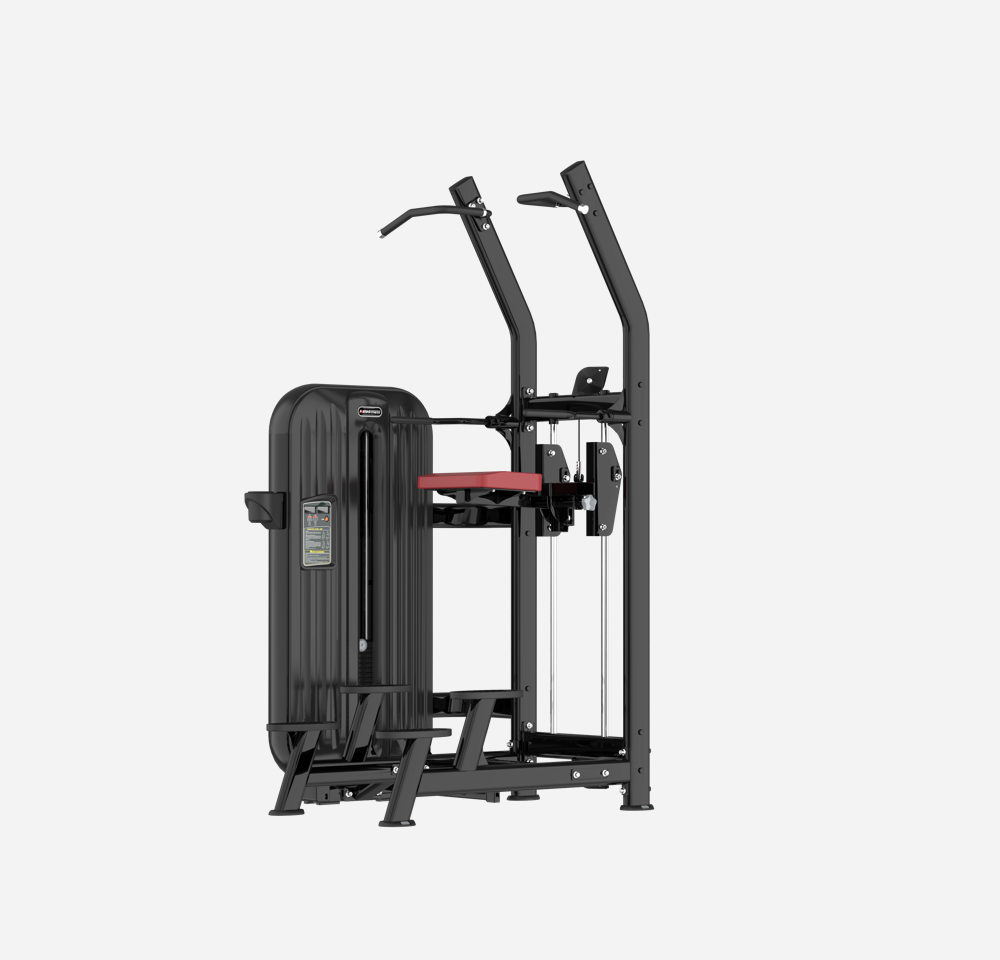
Ask about their R&D team. A genuine manufacturer invests in engineering and prototyping. For example, if they produce the T8-008 Assisted Chin/Dip
What Documents Should I Request to Confirm Manufacturing Capability?
Request three things: business license showing manufacturing scope, export certificates, and factory inspection reports (like ISO 9001 or SGS). Cross-check the business license address against the physical location they give you.
Also ask for product-specific certifications. For commercial equipment like the T8-008, they should have test reports for load capacity, weld integrity, and powder coating thickness. If they can't produce these per model, that's a red flag.
Why Does Buying Factory-Direct Matter for Commercial Gyms?
The 15-30% markup is being cut out by you that distributors add. For a 50-piece gym layout, that's significant. More importantly, warranty support is cleaner — you deal directly with the people who built the machine.
Customization is another big one. Need a different upholstery color or a logo plate? A true factory can do that during production. A middleman has to relay your request through the actual manufacturer, which adds lead time and miscommunication risk.
What Are the Red Flags That Point to a Middleman?
Vague answers about lead times, no physical inventory, and a catalog that spans too many unrelated product categories. If they sell treadmills, rowers, squat racks, dumbbells, and accessories all "in stock," they're likely aggregating from multiple sources.
Please check their product photos. If the same image appears across multiple supplier websites with different watermarks, that's a giveaway. Legitimate manufacturers like those producing the MCL Series will have unique photography from their own facility.
How Does the XVS Plate-Loaded Series Reflect True Manufacturing?
Look at the engineering. The XVS-17 ISO-Lateral Shoulder Incline weighs 145 kg and targets the pectorals, trapezius, infraspinatus, teres major, and deltoids. That's a heavy, purpose-built frame with iso-lateral movement that can't be copied easily by a reseller.
Real gym equipment manufacturers understand muscle mechanics and translate that into equipment. The XVS-20 Wide Pulldown works the lats, biceps, deltoids, and trapezius through a fixed path — that requires precise pivot points and cam design. That's factory-level knowledge.
Should I Visit the Factory Before Placing a Large Order?
Absolutely. For purchases above $10,000, a site visit is worth the flight cost. Walk the assembly line, check the welding quality on frames like the T8-011 Rotary Torso (80 kg weight stack), and verify the upholstery stitching on commercial pieces like the MH5600 recumbent bike.
Not visiting? Then do a live video call where they show you a machine mid-production and put a random model number on camera. This eliminates stock photo tricks and proves they have physical units.
What Specific Questions Expose a Non-Manufacturer?
Their steel source and grade should be asked. The MCL-001 chest press uses a 104 kg weight stack and handles up to 150 kg users — the frame must be high-tensile steel. A middleman won't know the gauge or tensile strength.
Ask about spare parts availability for each model. Can they supply a replacement pivot bushing for the XVS-14 Front Lat Pulldown? If they don't stock components, they aren't assembling anything.
Why Is After-Sales Support Easier With a Factory?
When something breaks — and it will in a commercial setting — you need parts shipped fast. Factories have inventory of every component for every model. A middleman has to place an order with the factory, wait for production, then ship to you.
Take the T8-008 at 286.5 kg with an 80 kg weight stack. If the cable snaps, a factory can ship a pre-cut, swaged cable within 48 hours. That's the difference between a week of downtime and two days.
Verify, visit and ask the hard questions no matter what types of manufacturers you are searching for, e.g. indoor fitness equipment manufacturer, commercial indoor fitness equipment manufacturer, school fitness equipment manufacturer, fitness equipment manufacturers in China etc.. Your equipment budget deserves the manufacturer's price — not a middleman's overhead.