

How To Order And Test Gym Equipment Samples From Chinese Factories | Sampling Before Bulk
Why You Shouldn't Skip the Sample Phase
Have you ever think about it is gamble without testing first before buying gym equipment from Chinese factories? You might get a great deal, or you might get a rack that wobbles under load. Comparing with the cost of a full container, the sample order cost is a fraction but for your insurance policy.
The real issue is that a catalog spec sheet doesn't tell you how the welds feel or whether the bushings wear out after 10,000 reps. You need physical proof. Without burning your timeline, the following is how to structure that test.
Step 1: Define Your Testing Criteria Before You Contact Suppliers
Know what you are looking for before you ask for a quote. Are you stocking a commercial facility or a home gym? The specs you care about will differ wildly. For example, if you are buying for high-traffic use, you need to check gauge thickness on the frame and the quality of the linear bearings.
Make a checklist. The weld quality, powder coat finish, bushing play, and seat padding density should be included You also need to verify the weight stack accuracy if the unit is plate-loaded or selectorized. Take this list to the negotiation table.
What to Inspect Physically
- Does it rock or flex during lateral movements? | Frame stability
- Is the motion smooth or does it hitch? | Guide rods and bearings
- Check for friction points and cable stretch. | Cable and pulley system
- Do the handles and seat positions suit your target demographic? | Ergonomics
Step 2: Navigating the Sample Cost and Logistics
Most Chinese factories will charge you full price for one unit plus shipping. That is standard. However, it is wise to negotiate to have the sample cost deducted from your first bulk order which can be placed within a specific timeframe. Get that in writing.
If a single unit is shipped by air, which makes the sample cost higher than the prorated bulk price. That is the price of certainty. Weigh that against the cost of a failed container shipment that sits in your warehouse unusable.
Step 3: Comparing Product Lines and Specs
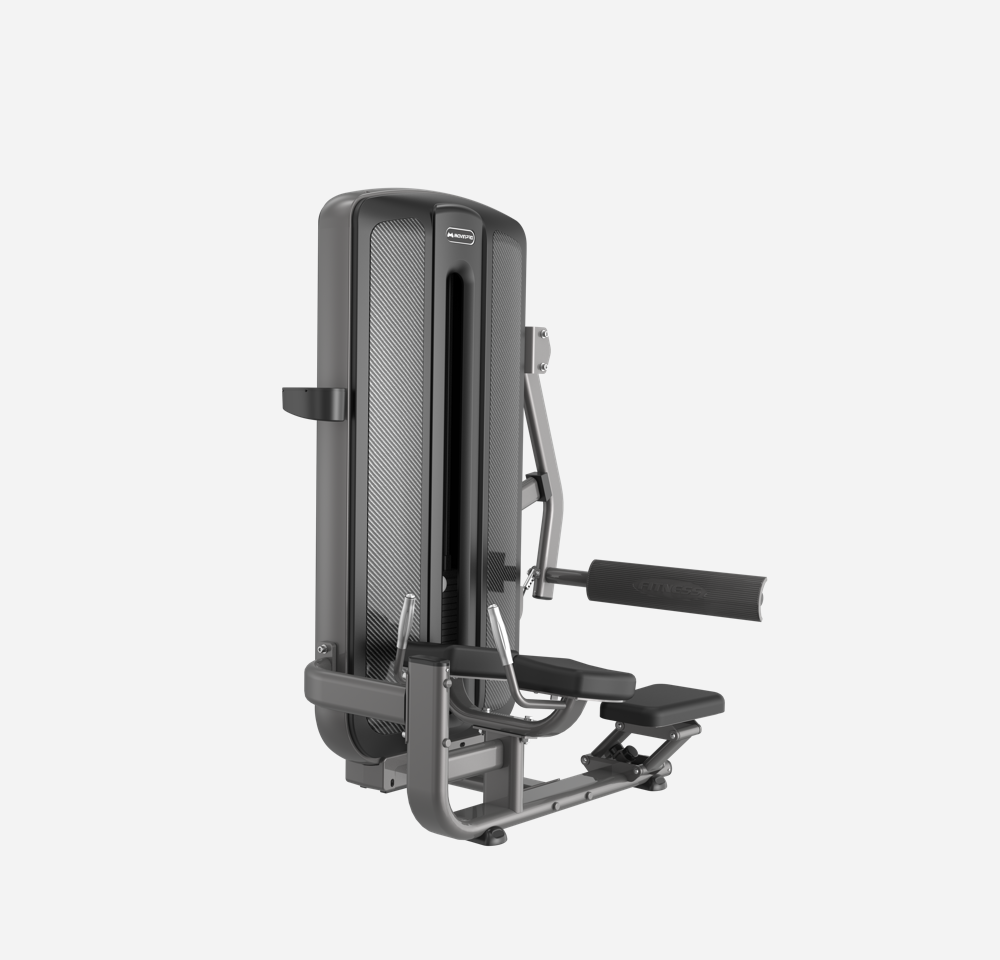
Not all "similar" machines are created equal. Take leg extension units, for instance. The MTMS-016A Standing Leg Extension
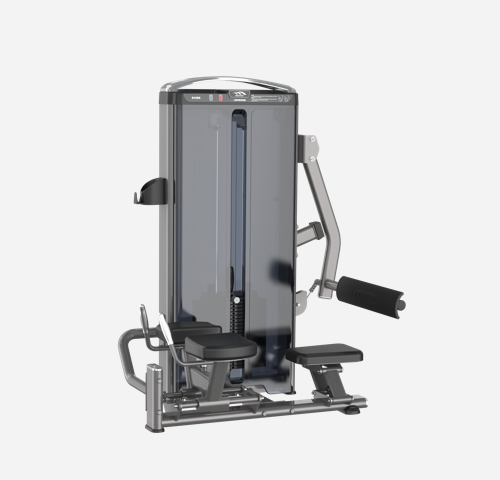
For hip work, the AMV-43 Standing Outer Thigh Abductor

Case Study: The Multi-Station Dilemma
You might be deciding between a compact unit and a large rig. The XPH-204 is a 255 kg unit measuring 1250×1770×2415 mm. It offers a free squat rack, pull-up bars, and storage. It is a solid choice for a small studio.
Alternatively, the XPH-201 weighs in at 1045 kg and spans 10490×2455×2435 mm. This beast includes Smith machines, TRX stations, climbing training stations, and power rods. The user experience is entirely different. You cannot judge the flow of a large rig like the XPH-201 from a photo. You need to walk the floor plan and test the spacing between stations.
Step 4: Testing the "Feel" of the Movement
Machines in the XVS series are designed for free weight and plate-loaded training. The XVS-23 chest press and lat pulldown targets the pectoralis major, lats, and biceps. But does the cam profile match the natural strength curve? You cannot tell that from the dimension spec of 1870×1365×1050 mm or the 127 kg weight.
You need to load the plates and feel the initial pull. If the resistance is too heavy at the start (sticking point), users will hate it. If it is too light at the lockout, the muscle tension drops off. That "feel" is the difference between a good workout and a frustrating one.
Step 5: Don't Forget the Peripheral Stations
When you sample a multi-station system, please make sure every element you plan to sell can be tested. The storage racks, dip bars, and rope hooks need to be durable. If you are ordering the MHL-010 Standing Abductor, verify whether you want it plate-loaded or with a selectorized stack. The 1900×1530×1540 mm footprint is large, and the plate-loaded version changes the user experience.
Check the pivot points on the arm pads. In the XVS-37 Standing Outer Thigh Adductor, the movement works the iliotibial band and gluteus maximus. A sloppy pivot on this machine ruins the biomechanics. You won't see that in the product photos.
Step 6: The Report Card Method
When the sample arrives, do not just give it a quick look. Film the assembly process. Let your strongest coach and your lightest member test it. Measure the noise level on the guide rods. The powder coat for chips should be checked as well after a week of use.
Take notes on the XMDM-016A Standing Leg Extension if you ordered that. Does the foot roller stay in place? Is the adjustment mechanism smooth? These details tell you how much engineering went into the product versus how much was just steel stock.
Final Recommendation
Sample the most complex piece of equipment in your intended order first. If you are buying a XVS-31 Standing Chest Trainer, test that. If the complex piece passes, the simpler pieces usually follow suit. If the complex piece fails, you have saved yourself a huge headache.
Don't hesitate to build a relationship with the direct fitness equipment factory. Ask for videos of the welding process. Ask for independent load test reports. The sample is the start of the conversation, not the end of it.
MBH Fitness can be one of the best commercial gym equipment factory for your selection. Check whether it can be the gym equipment distributors with samples.