

How To Choose The Right Commercial Fitness Equipment Manufacturer For Your Distribution Business
How to Choose the Right Commercial Fitness Equipment Manufacturer for Your Distribution Business
Picking a manufacturer isn't about finding the cheapest quote. It's about finding a partner whose catalog, lead times, and build quality won't leave you stranded when a gym chain orders 40 units and expects them in several weeks. Here's how to screen suppliers without wasting a year on samples.
Start With the Catalog's Breadth
A fitness equipment distributor lives and dies by range. If a gym equipment manufacturer only makes cardio, you'll need three other suppliers for strength. Look for one that covers both. A fitness equipment supplier offering a recumbent bike like the Commercial Intelligent Recumbent Bike (MH5600) alongside selectorized pieces like the T8-15 Leg Press

The depth within each category should be checked too. Cardio should span treadmills, upright and recumbent bikes. The Commercial Intelligent Upright Bike (MH5500) and the MH1001 treadmill (2170×970×1640 mm, 200 kg max user weight, 1–20 km/h, 0–20% incline) give you two solid anchor SKUs for a cardio zone.
Verify Build Specs Instead of Marketing Copy
The actual numbers are definitely focused on and asked for. Main frame tubing, weight stack material, max user weight. The XMH Series, for instance, runs 50×150×3 mm main frame tubing which's a spec you can quote to a gym owner who cares about durability.
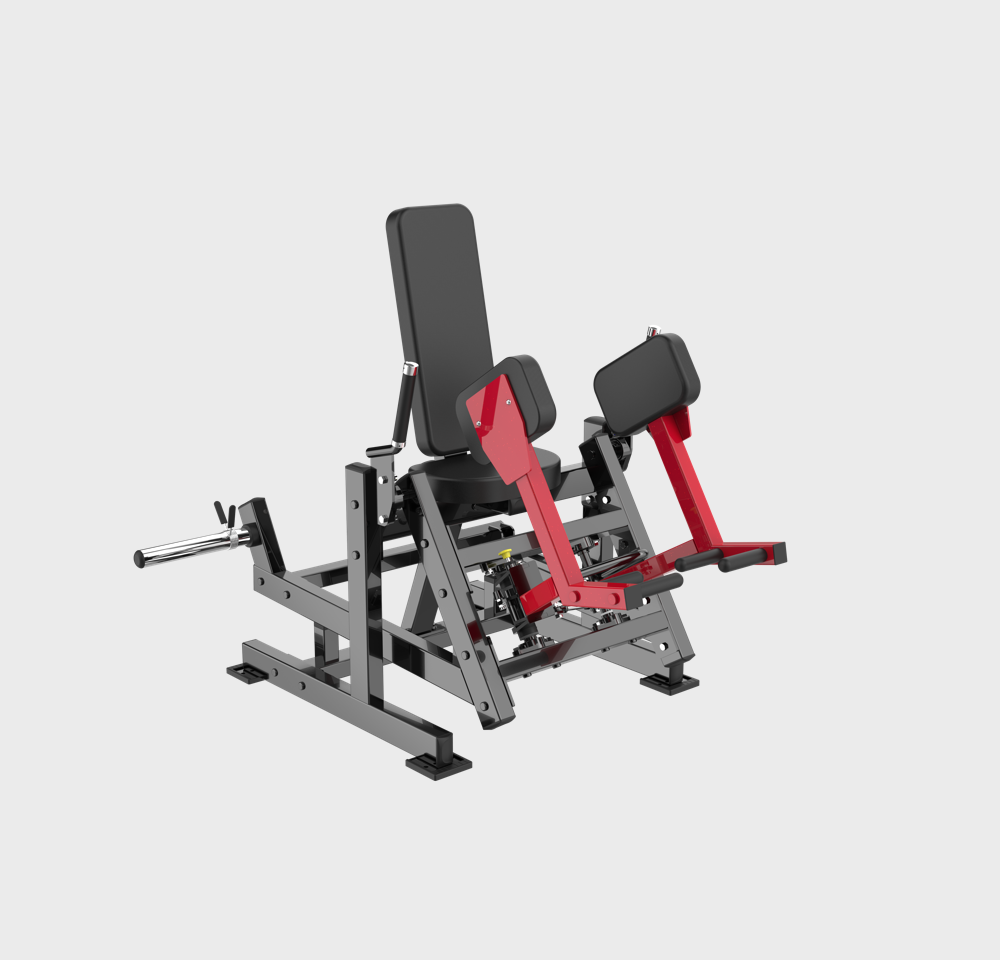
The commercial strength equipment should list target muscles clearly. The T8-1819 Adductor&Abductor

Test the Tech Layer
Smart features sell memberships and keep them active. Experience firsthand how intuitive interfaces, connected ecosystems, and data-driven workouts create an irresistible draw for prospective members while driving long-term retention. Ask what's actually on the console. The MH5600 and MH5500 both run 430 W max motor power, 1000 RPM, magnetic resistance with multiple levels, and self-powered operation which means no cable runs required during install. That last detail saves your clients real money on electrical work.
On the strength side, the XMH Series includes a 10.1-inch touchscreen, face recognition and QR login, AI exercise prescription, and hydraulic adjustment. Those are the features that get a commercial gym to sign a multi-unit deal.
Match the Range to Your Market
Plate-loaded versus selectorized matters for your buyer mix. The XAL Series covers plate-loaded commercial strength. The XVS Series handles free-weight and plate-loaded work — the XVS-16 Arm Down Back Muscle Training (1830×1950×2060 mm, 171 kg) targets the pecs, lats, triceps, deltoids, and trapezius.
Selectorized lines need weight stack clarity. The T8-010 Abdominal Crunch uses an 80 kg stack with a 150 kg max user weight. The XMH-011 Rotary Torso carries an 80 kg stack and works the rectus abdominis, obliques, and lower back.
Questions to Ask Before You Sign
- What's the production lead time for a 50-unit order?
- Are spare parts stocked locally or shipped from the factory?
- Can they private-label consoles and frame colors?
- What's the warranty split between frame, parts, and labor?
- Do they provide spec sheets with real dimensions, not estimates?
Get written answers. A fitness equipment manufacturer who hesitates on lead times will hesitate on replacements too.
Pay Attention to the Red Flags
Vague specs are the first warning. If a gym fitness supplier can't tell you the net and gross weight of a unit, they haven't shipped enough of them. Second: no dedicated distributor support. Third: catalogs that mix units and currencies without consistency.
The right commercial fitness equipment manufacturer partner gives you documented specs, a full floor of equipment, and a support line that answers. Everything else is negotiation.
MBH Fitness can be your right commercial fitness equipment manufacturer. Please don't hesitate to contact MBH.