

From Factory To Fitness Market: How Manufacturers And Distributors Build Long-Term Partnerships
From Factory to Fitness Market: How to Choose Equipment Partners That Last
Most gym owners obsess over the first purchase. The smart ones obsess over the fifth. A distributor or manufacturer who knows your layout, your member profile, and your replacement cycle which's where the real money is. If you're comparing factory-direct suppliers against regional distributors, here's what actually separates a long-term partner from a one-time transaction.
Factory-Direct vs Distributor: What You're Really Buying
Factory-direct gets you lower unit cost and the ability to customize specs. The trade-off is longer lead times, slower spare-parts turnaround, and often zero local service. A distributor adds 15–30% to the invoice but handles freight, installation, and warranty claims on your behalf.
Neither model wins by default. A 2,000 sqm facility running plate-loaded equipment can go factory-direct and absorb the logistics. A 200 sqm studio with two staff members cannot.
Ask any potential partner three questions: What's your spare-parts lead time? Who handles warranty labor? Can you supply the same model line in three years? Vague answers mean you'll be re-sourcing equipment within 24 months.
Where Partnerships Get Tested: Product Consistency
A serious manufacturer builds a platform, not a catalog. When a supplier offers the same movement pattern across multiple series, you get flexibility in your floor plan without retraining staff.
Take standing leg extensions for examples. A partner producing this across four different series is a partner who has standardized their engineering. You can specify the MEL-016
Multi-Joint Stations Tell You More Than Single-Joint
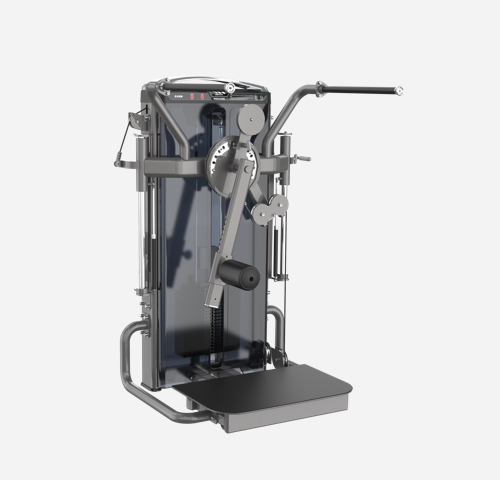
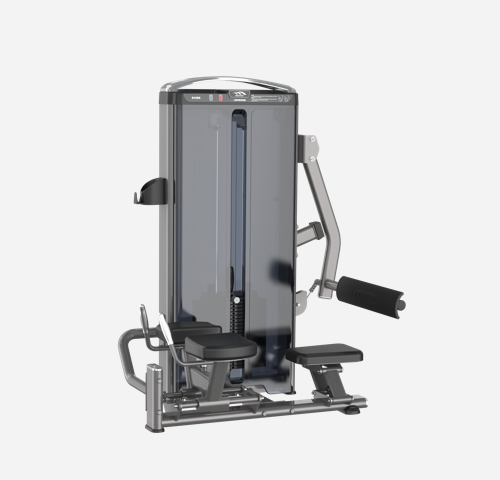
Multi-station systems expose a manufacturer's fabrication quality fast. The XPH-204 pulls together a free squat rack, barbell rack, three storage racks, and six pull-up stations in 1250×1770×2415 mm at 255 kg — compact enough for a corner install. The METTA5-17 Standing Abductor is the opposite story: 210 kg of steel and a 1900×1560×1540 mm footprint for glute and hip abductor work.
Compare that to the XPH-201 at 10490×2455×2435 mm and 1045 kg. Same manufacturer, wildly different scale. That range is a good sign which means they build to a spec sheet, not a template.
Specs Predict Longevity
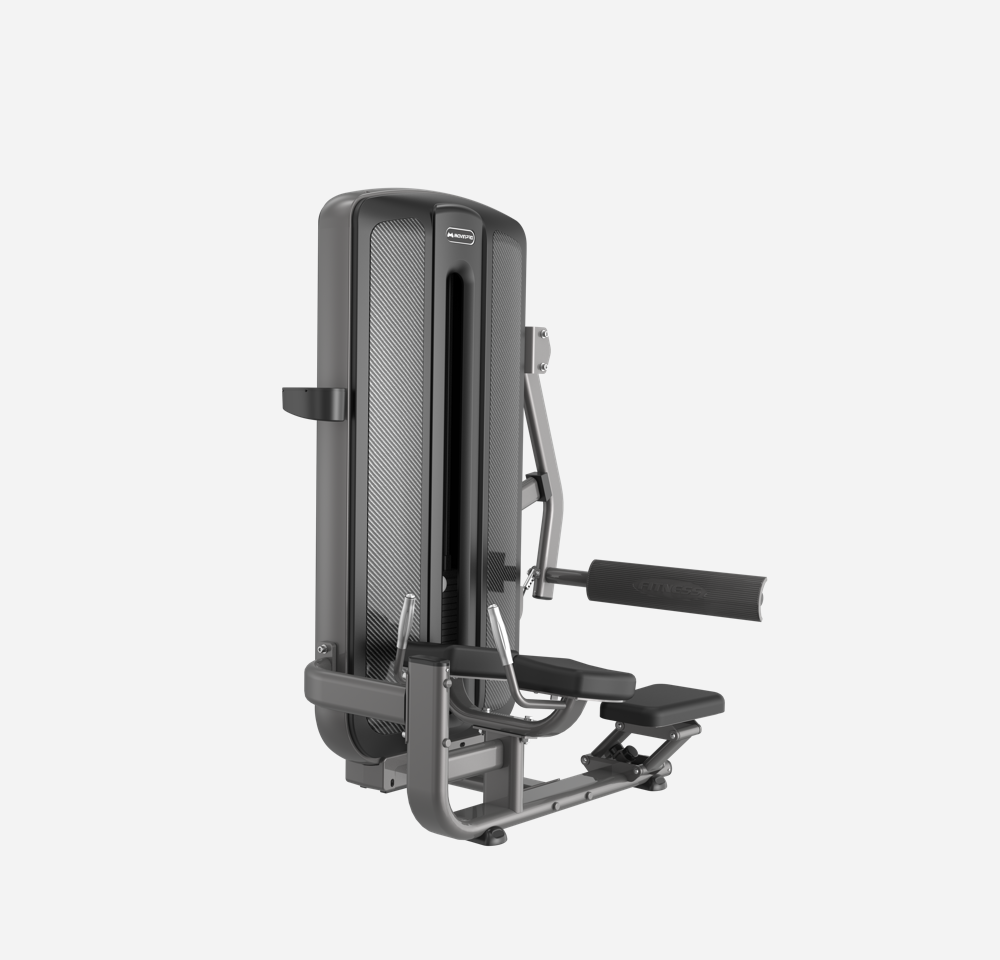
- Steel gauge and weight: A 127 kg chest press and lat pulldown combo (XVS-23, 1870×1365×1050 mm) suggests heavier tubing than a 113 kg unit like the XVS-43 standing outer thigh adductor. Heavy frames resist wobble longer.
- Plate-loaded consistency: The MHL-010 standing abductor uses plate-loaded weight, same as the XVS-23, XVS-26, XVS-31, XVS-32, and the 115 kg sitting outer thigh abductor XVS-26 trains the IT band, glute medius, glute max, and TFL. Mixed loading systems on one floor confuse members.
- Footprint discipline: The XVS-31 standing chest trainer at 1500×1400×1300 mm fits zones where the XVS-32 iso-lateral standing lateral raise at 2230×1410×1760 mm and 168.5 kg will not.
- Modular layouts: GYM LAYOUT SETS scale from 1250×1770×2415 mm up to 20475×8460×2960 mm, 255 to 4800 kg. Note the stated net weight excludes Olympic bars — budget for those separately.
How to Structure the Agreement
Push for a phased supply schedule rather than one bulk order. You validate product quality on a 10-unit first phase before committing to 60. Request a locked spec sheet with part numbers, so replacement orders three years out match what's on your floor.
Get spare-parts pricing in writing at signing. Upholstery, cables, and pulley wheels fail first — those line items should be fixed, not quoted at spot rate.
The best partnerships look boring on paper: consistent lead times, predictable specs, one phone number. That's the point. Your members judge the equipment. You judge whether the supplier is still answering in year five.
MBH Fitness, the original factory direct fitness equipment manufacturer, can be your top choice of long term fitness business partner. Please feel free to contact.