


A Distributor'S Guide To Selling Commercial Gym Equipment To Fitness Clubs
Fitness club buyers don't shop like home users. They're weighing floor space, member throughput, maintenance cycles, and how fast a machine pays for itself. Your job as a distributor is to match fitness equipment to those realities. Here's how to talk about it.
Start With the Floor Plan But Not the Catalog
Most clubs have already committed to a layout before they call you. Ask for the square footage of each zone first. Functional areas, strength lines, and cardio rows have very different space demands.
A modular functional training set

One caveat worth flagging early: net weight on these layouts excludes Olympic bars where stated. Tell buyers to budget for bars separately so there's no surprise at installation.
Where Energy Costs and Maintenance Collide | Cardio
Clubs run cardio 16+ hours a day. Self-powered units cut both cable runs and electricity bills, which is a strong pitch for 24-hour facilities.
The MH5600 commercial intelligent recumbent bike handles a 200 kg max user and runs magnetic resistance across adjustable levels with heart-rate monitoring. The 18.5" touch version weighs 139 kg gross versus 94 kg net on the LCD model. That weight difference matters for upstairs installs.
Pair it with the MH6800 non-motorized treadmill. Its 433 mm running surface and 590 mm handrails suit walkers and rehab users more than sprinters. Be honest about that positioning. Selling it as a HIIT treadmill will cost you a return.
Match Muscles to Member Demographics | The Strength Line
Ask who the club serves. A 25-year-old powerlifting crowd needs different iron than a 55-plus wellness center.
For general-population clubs, selectorized machines win on throughput. The T8-001A chest press works pectoralis major, triceps, and anterior deltoid with a 100 kg weight stack and 150 kg max user. The M1-018 adductor targets the vastus medialis with the same 100 kg stack. Both let staff onboard new members in minutes.
For hip and glute programming, the XVS-43 and XVS-37 standing outer thigh adductors hit the iliotibial band, gluteus maximus, biceps femoris, and tensor fasciae latae. Walk buyers through that muscle list. It justifies the purchase against cheaper single-function units.
Rotary and isolation pieces round out the line. The T8-11 rotary torso

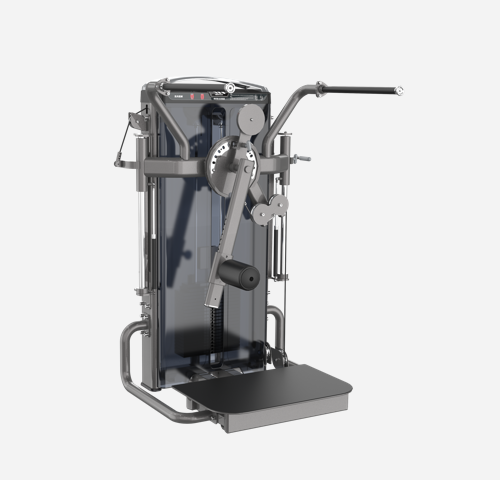
Don't forget the lat station. The MTMS-012 lat pull down anchors any back-day circuit. For quad work with a standing design, the MTMS-016A standing leg extension is a solid upsell.
Storage Sells Machines
Messy floors kill a gym's premium feel. The MH-039 barbell rack (1240×820×1710 mm, 103 kg) and MH-041 weight plate tree (745×670×935 mm, 29 kg) are cheap add-ons that make the whole install look considered. Bundle them into every quote.
What to Ask Before You Quote
- Peak simultaneous member count per zone
- Floor load limits on upper levels
- In-house maintenance capability
- Whether self-powered cardio fits their power setup
- Frame and upholstery options for brand consistency
Get those answers and your quote writes itself. Sell the fitness equipment but not the catalog. If you would like to check more fitness equipment, MBH Fitness should be considerated. The commercial gym equipment manufacturer - MBH Fitness Equipment Factory has delivered one-stop solutions for gyms, hotels, and fitness clubs etc. since 2000. With China 500,000m² smart factory now, request a free quote today!