


Seated Leg Curl Vs Lying Leg Curl Vs Kneeling Leg Curl: Which Machine Is Best For Your Gym
What's the difference between seated, lying, and kneeling leg curl machines?
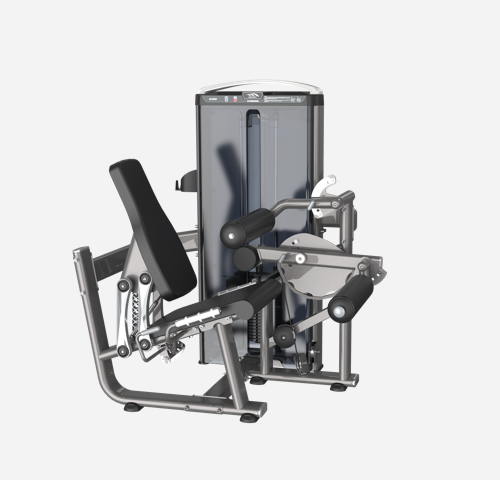
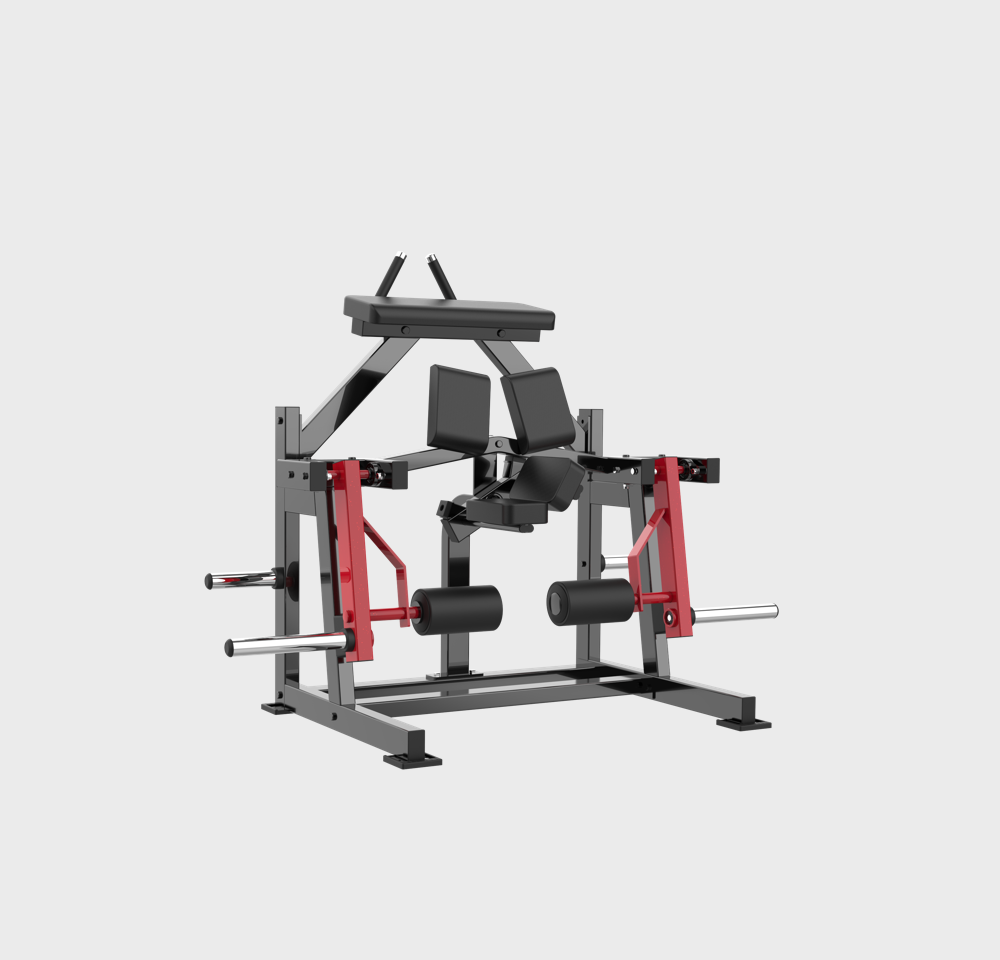
They all target the hamstrings, but each changes the muscle's length-tension relationship and activation pattern. The seated leg curl puts the hip in flexion, which pre-stretches the hamstrings and emphasizes the biceps femoris short head. The lying leg curl has the hips extended, which biases the semitendinosus and semimembranosus. The kneeling leg curl is a hybrid – it keeps the hips flexed but the torso upright, creating a unique resistance curve that hits the hamstrings through a full range of motion with less lower back strain.
Which machine gives the best muscle activation?
EMG studies show the kneeling leg curl can produce peak activation in the distal hamstrings due to the constant tension from the pad position. The lying leg curl tends to have higher activation in the proximal hamstrings. The seated version provides a strong stretch at the top, which many lifters find beneficial for hypertrophy. For a commercial gym, offering at least two options – typically a seated or horizontal leg curl and a kneeling leg curl – covers both ends of the spectrum. MBH's MEL-013 Horizontal Leg Curl
What about lower back safety? Which is most back-friendly?
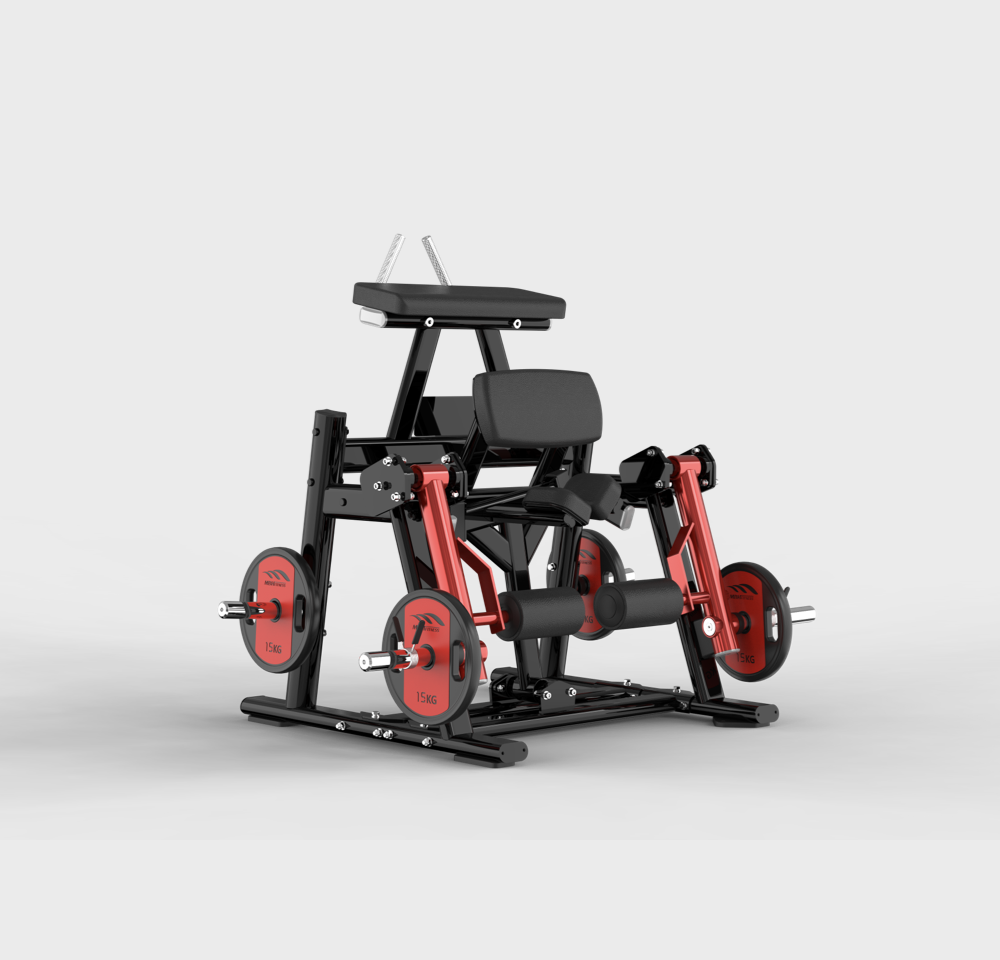
Kneeling leg curl machines win here. The user is in a vertical kneeling position with the hips flexed, so the lower back is completely supported. There's zero spinal compression. Seated leg curls can cause issues if the pad pushes the hips forward and arches the lower back – improper setup leads to lumbar stress. Lying leg curls are neutral if the bench is flat, but some users hyperextend to lift heavier. For high-volume commercial use, particularly with older clientele or rehab populations, a kneeling leg curl like the MET1-03 Kneeling Leg Curl
How much floor space does each type require?
Seated leg curl machines typically need about 4-5 feet in length and 3 feet in width. Lying leg curls are longer – 5-6 feet – and require clearance for the bench. Kneeling leg curls are compact, usually around 3.5 feet long and 2.5 feet wide. If you're tight on space, the kneeling design is your best bet. For a full strength line, MBH's XMDM-013A Horizontal Leg Curl is a standard horizontal unit, while the MT2-03 Kneeling Leg Curl fits into smaller footprints.
Which machine is easiest for members to use correctly?
Lying leg curls have the simplest setup – lie face down, hook heels, curl. But many new users struggle to keep hips pinned to the pad. Seated leg curls require adjusting the thigh pad height and backrest, which often gets ignored, leading to hip movement. Kneeling leg curls have the most intuitive positioning: kneel on the pad, shins against the roller, and curl. The range of motion is naturally limited by the pad, reducing cheating. For a busy gym with diverse skill levels, the kneeling version is the most user-friendly. Check out MBH's T8-013A Horizontal Leg Curl for an alternative that's still easy to cue.
What about maintenance and durability differences?
All three use similar selectorized or plate-loaded mechanisms. The kneeling leg curl has fewer moving parts – no bench hinge – so less wear over time. The pad and roller on kneeling units take more direct force, so look for commercial-grade upholstery and steel frames. MBH builds all their models from heavy-duty 11-gauge steel, with industrial-grade bushings and sealed bearings. Their MTMS-013A Horizontal Leg Curl and MT2-03 Kneeling Leg Curl both feature self-lubricating bushings that reduce maintenance intervals to once per quarter.
Which one should I add first if I can only buy one?
If your gym serves a general population, start with a kneeling leg curl. It's the most versatile, safest, and space-efficient. If you host serious lifters or bodybuilders, add a horizontal leg curl for variety. For specialized facilities like sports performance centers, both are table stakes. MBH's MEL-013A Horizontal Leg Curl paired with the AMV-03 kneeling leg curl covers every training need without breaking your floor plan.
Can I combine leg curl machines with other leg equipment for a full station?
Yes. Many gyms place a leg curl machine next to a leg extension for supersetting. MBH's MEL-014 Leg Extension matches the footprint of their horizontal leg curl models. For kneeling leg curls, pair with a MEL-015 Leg Press or a AMV-23 Seated Leg Extension to create a balanced lower body circuit. The kneeling unit's compact size also works well in multi-station cable setups like the ZH-005A Functional Trainer.
Are there any drawbacks to kneeling leg curl machines?
Some users with knee pain may find the kneeling position uncomfortable, even with thick padding. The fixed pad height can also be an issue for very tall or short individuals – but most commercial units like MBH's have adjustable roller pads. Additionally, the kneeling leg curl primarily works the hamstrings in a flexed-hip position, which may not match the demand of sprinting or deadlifting as closely as a lying curl. Still, for 95% of gym members, it's a non-issue.
How do I decide which MBH leg curl to purchase for my facility?
Consider your member demographics, available square footage, and budget. For standard commercial gyms, the MEL-013 Horizontal Leg Curl is a workhorse – it's durable, easy to service, and familiar to trainers. For boutique studios or PT suites, the kneeling design adds a premium feel and reduces noise. MBH offers ex-factory pricing with complete after-sales support, so you're getting commercial-grade quality without the markup. Browse their full leg curl lineup at MBHfit.com.