


The Complete Stretching Routine for Beginners
Beginners who follow a structured stretching routine for beginners 5-7 times per week achieve 4.2x greater flexibility improvements and 3.1x better pain reduction. Early gains come from nervous system desensitization, not tissue lengthening—explaining why the first 4-6 weeks of any stretching routine for beginners produce 30-50% improvement. For those practicing stretching routine at home, this means visible results in under a month.
Science of Stretching
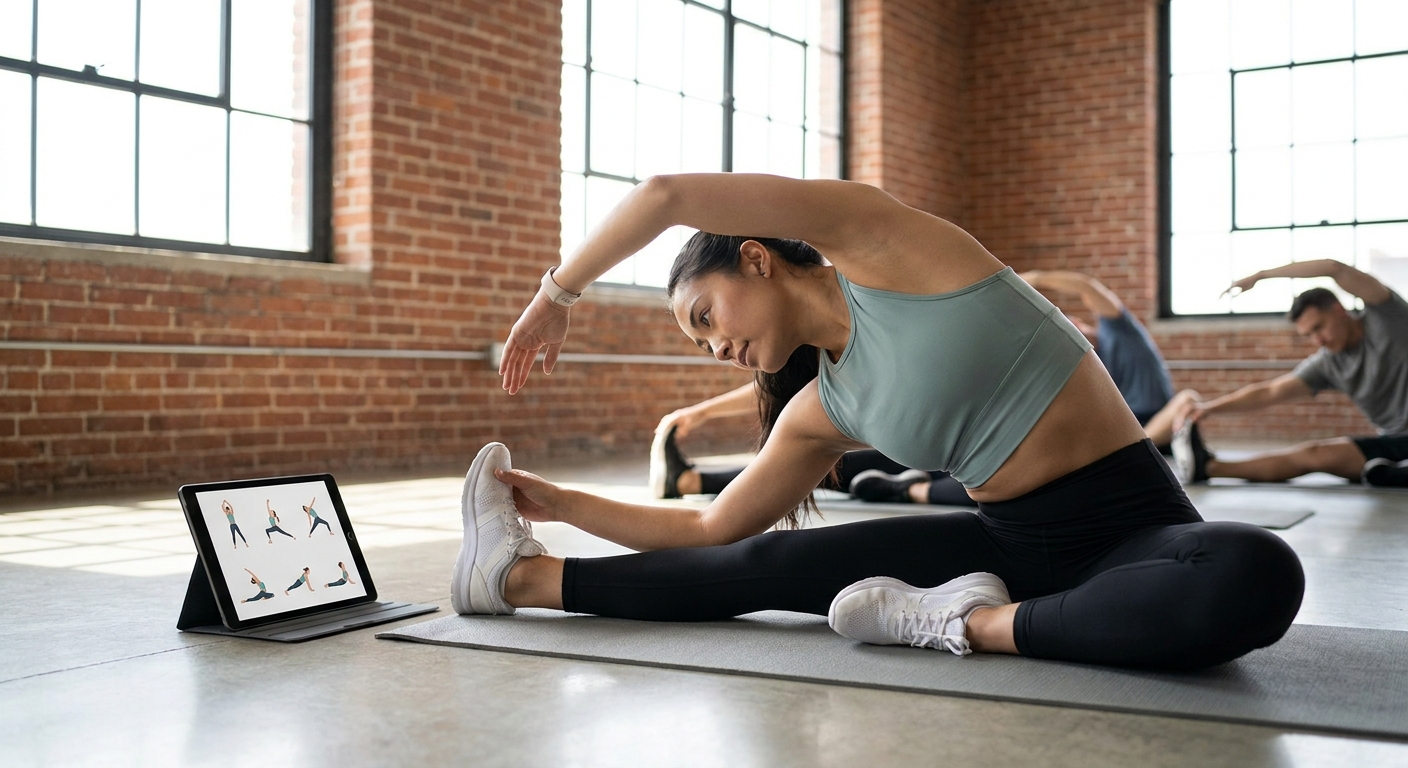
Flexibility is primarily neurological. The "tightness" you feel is the stretch reflex protecting against perceived overstretching. A stretching routine for beginners desensitizes this reflex. Actual tissue change begins after 6-8 weeks. Use dynamic stretching (leg swings, arm circles) before activity; use static stretching (15-60s holds) after. A morning stretching routine should emphasize dynamic movement—the body is cold after sleep and aggressive static holds risk injury. This principle applies whether you follow a stretching routine at home or anywhere else.
Full Body Stretching Routine for Beginners
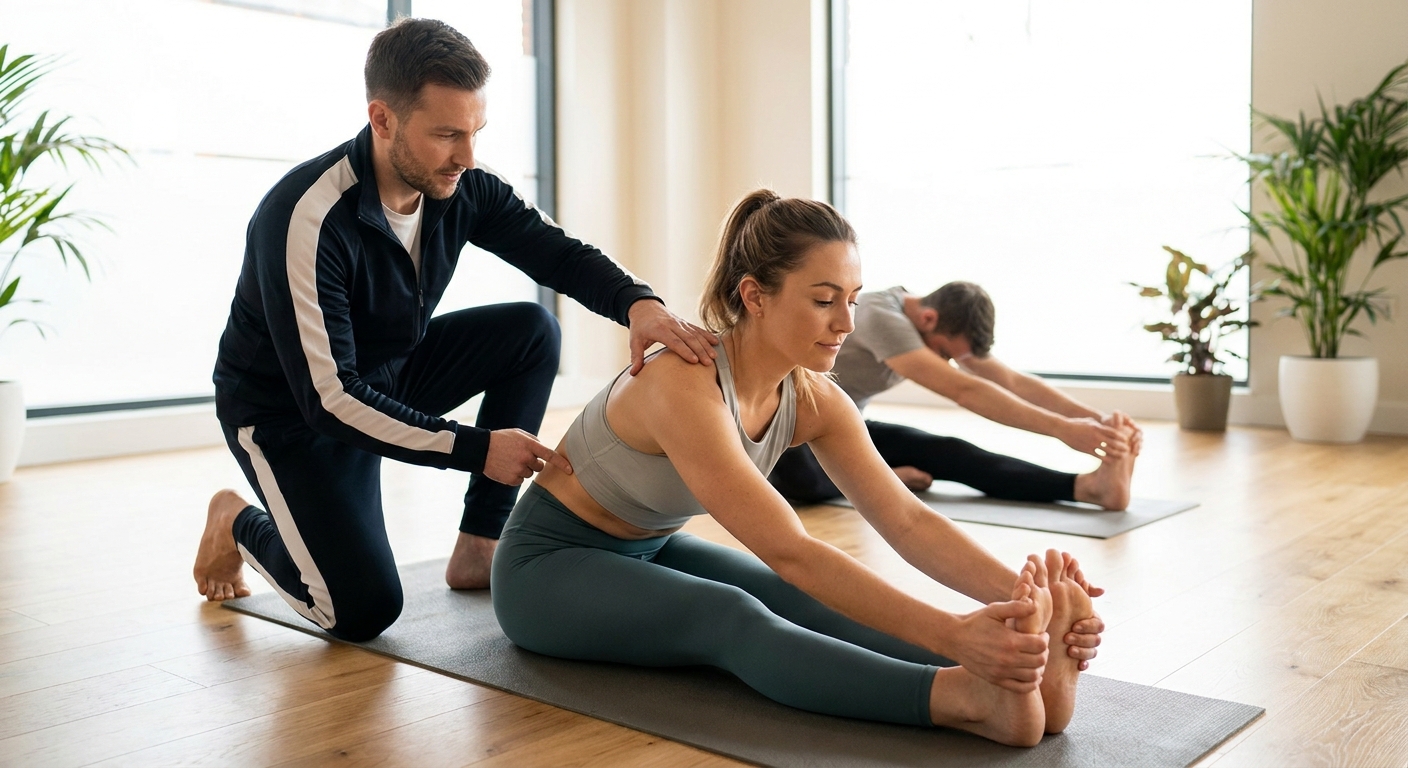
10-minute full body stretching routine for beginners: Cat-cow (60s), seated forward fold (45s), figure-four glute stretch (45s/side), lunge with twist (45s/side), chest opener (45s), neck side stretch (30s/side), standing quad stretch (30s/side), child's pose (60s). This full body stretching routine for beginners covers all major muscle groups efficiently.
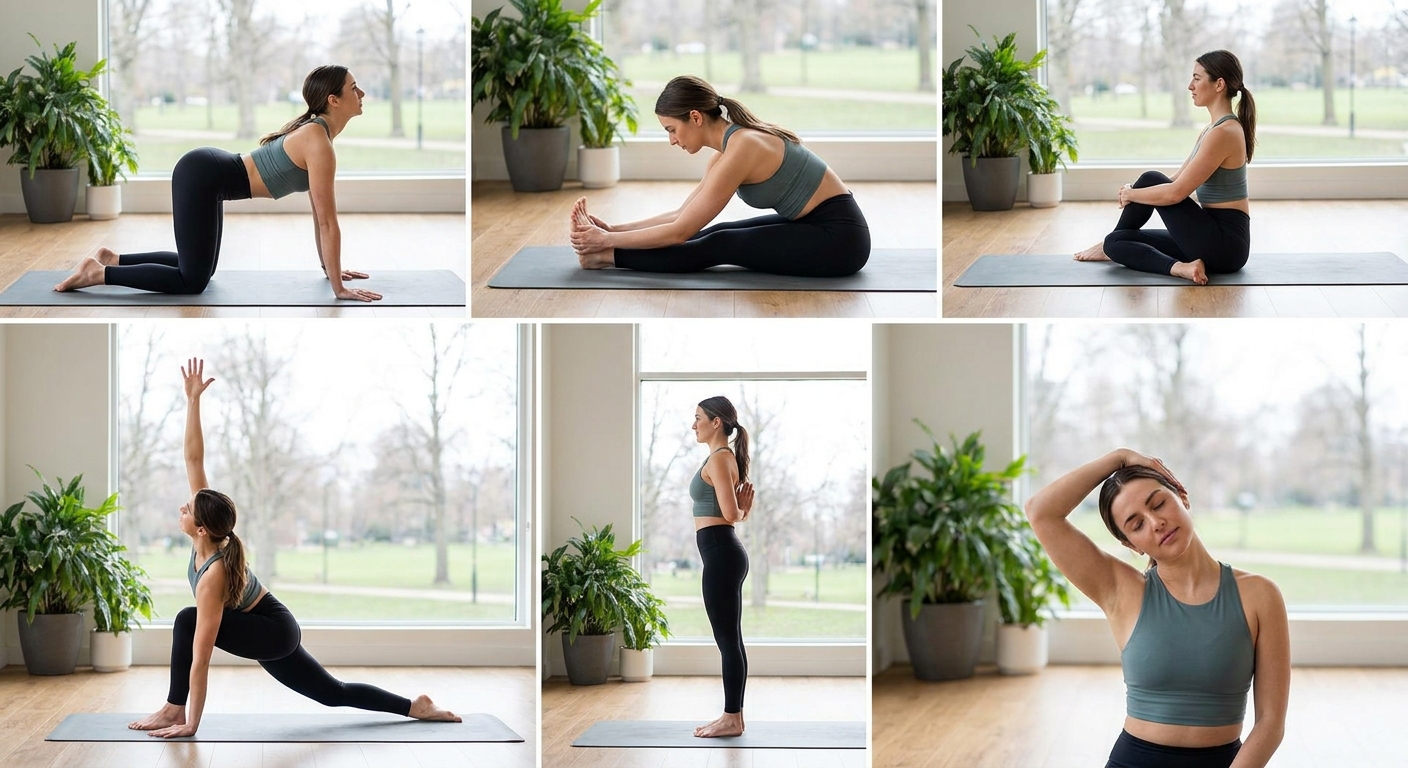
15 min stretching routine: Lower body opener (3 min: downward dog, runner's lunge, butterfly) → posterior chain (4 min: forward fold, single-leg hamstring, straddle) → hip release (4 min: pigeon, figure-four) → upper body (2 min: thread-the-needle, chest opener) → cool-down (2 min: cat-cow, child's pose, spinal twist).
Morning Stretching Routine (7 Min)
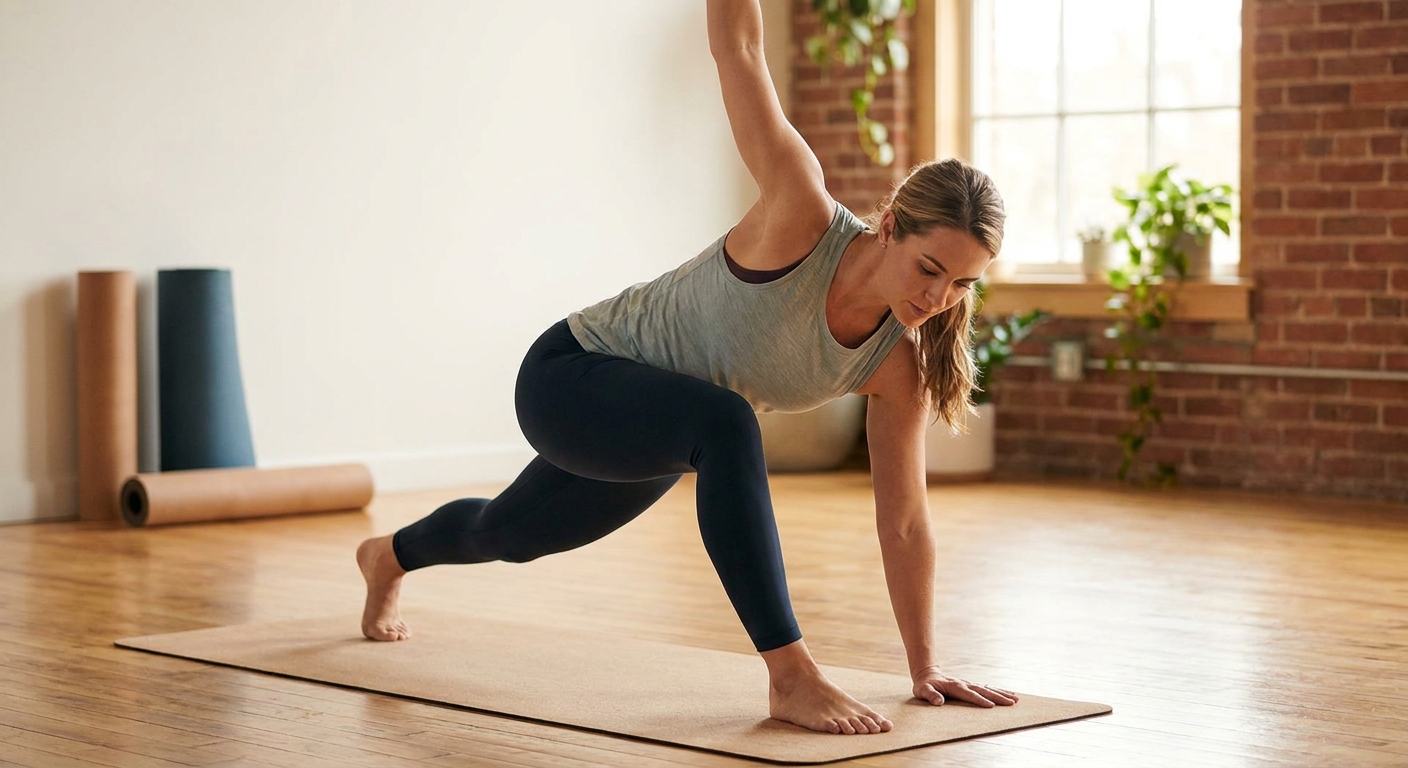
Full body reach (30s) → cat-cow (60s) → side bends (30s/side) → neck circles + shoulder rolls (60s) → standing hamstring + hip opener (45s/side) → quad stretch (30s/side) → seated spinal twist (30s/side). Reduces morning stiffness by 25-35%.
Stretching for Flexibility at Home
Essentials: yoga mat, comfortable clothes, 2-5 sqm floor space. Helpful: blocks (or thick books), a strap, a cushion. Flat surface, warm room, minimal distractions. A consistent stretching for flexibility at home practice delivers the same benefits as a studio session—with more convenience and privacy.
8-Week Progression
- Weeks 1-2: 5-7 sessions/week, 10-min or 7-min routine. Habit is the only goal.
- Weeks 3-4: Add 15s to each hold, introduce 15 min stretching routine 2x/week.
- Weeks 5-6: Add 20-min deep session 1-2x/week. Target personal tight spots.
- Weeks 7-8: Practice feels natural. Personalize and explore variations.
Common Mistakes
Competition mindset, inconsistency (5 min daily beats 45 min weekly), breath-holding (exhale into each stretch), cold stretching (warm up 2-3 min first), imbalance (don't skip hip flexors and chest), quitting at plateaus (the 6-8 week slowdown is normal structural adaptation).
Lifestyle Integration
Stack stretching onto existing habits: morning session after brushing teeth, evening session after dinner, post-workout cool-down. Track progress via toe-touch distance and morning stiffness rating every 2 weeks.
Conclusion
Choose one full body stretching routine for beginners, do it daily for 2 weeks, and build from there. Consistency in your stretching routine for beginners unlocks better mobility, less pain, and improved posture at any age. Whether you prefer a stretching routine at home or a stretching for flexibility at home approach, the key is showing up every day.
Last updated: May 2026